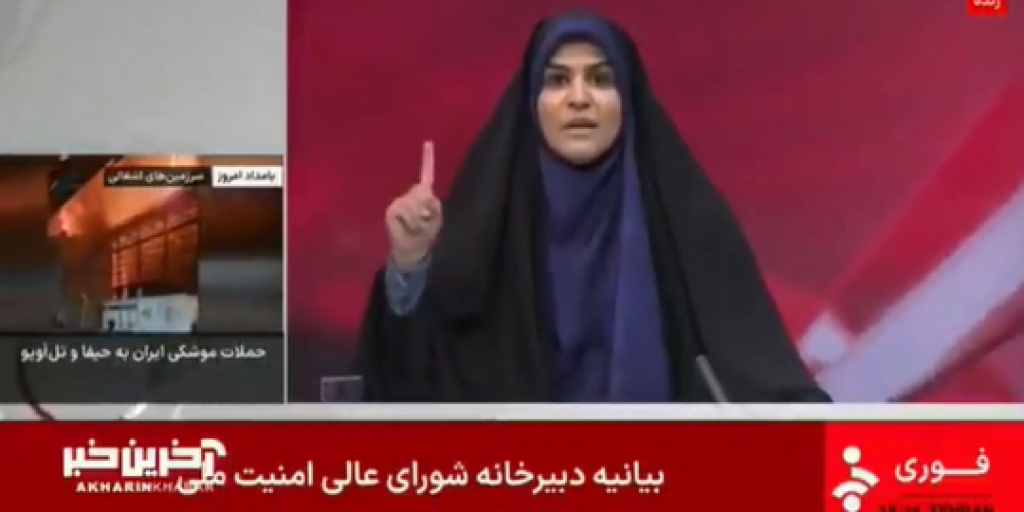
Iranian journalists killed in targeted Israel attack during live broadcast
The deceased journalists are Nima Rajabpour, Editor-in-Chief of Iran’s State TV news channel Khabar, and Masoumeh Azimi, secretary at the IRIB. Local media reported that a dozen others were injured
Israeli strikes hit the building of Iran’s State broadcaster as news anchor Sahar Emami was speaking live. The broadcast was abruptly interrupted as the presenter hurried off camera.
Watch Al Jazeera’s report, here
The bombing came shortly after the Israeli military issued an evacuation warning for the district in Tehran, where the offices of Iran’s State broadcaster are located. Minutes before the attack, Katz said ‘the Iranian propaganda and incitement mouthpiece’ is about ‘to disappear’.
Following the minister’s threats, the IFJ called on the United States and European governments to put pressure on Israel to refrain from attacking media facilities.
Media reported that Iran issued an evacuation warning for Israeli TV channels (the N12 and N14) according to Iranian State TV, adding that the order came in response to the Israeli attack on Iran’s broadcasting service.
The IFJ reminds media organisations that they are responsible for the safety of their employees and, particularly in times of conflict, they must ensure that their staff comply with evacuation warnings.
The Israeli military confirmed responsibility for the attack, claiming that the ‘building was used by the Iranian Armed Forces under the guise of civilian activity’. In a statement, Israel’s Defence Minister said that ‘the Iranian regime’s propaganda and incitement broadcasting authority was attacked by the IDF after a widespread evacuation of the area’s residents’.
The spokesperson for Iran’s Foreign Minister, Esmaeil Baqaei, condemned the strike calling it ‘a wicked act of war’ in a post on X.
The tension between Israel and Iran has escalated since Tel Aviv launched its surprise offensive on multiple Iranian targets on 13 June. Waves of missiles have struck cities in both countries resulting in hundreds of civilian deaths and injuries. The unprecedented attack on the IRIB’s facilities came on the fourth day of the conflict.
IFJ General Secretary Anthony Bellanger said: ‘We strongly condemn the targeted attack on Iran’s State broadcaster and mourn the loss of our two colleagues.’
‘The IFJ reminds all parties that, under international law, journalists are civilians, and deliberate attacks against them constitute war crimes. We once again urge warring parties to refrain from targeting media facilities
‘Claiming that a media outlet’s editorial line is hostile to your cause does not justify an attack. Those responsible for crimes against journalists must be brought before international criminal courts.”’
The Federation calls on journalists and media organisations covering the conflict between Israel and Iran to stick to professional principles. As stated in the IFJ’s Global Charter of Ethics.
In particular, the IFJ recalls the following articles:
- Article 1: ‘Respect for the facts and for the right of the public to truth is the first duty of the journalist’
- Article 5: ‘The notion of urgency or immediacy in the dissemination of information shall not take precedence over the verification of facts, sources and/or the offer of a reply’
- Article 9: ‘Journalists shall ensure that the dissemination of information or opinion does not contribute to hatred or prejudice and shall do their utmost to avoid facilitating the spread of discrimination on grounds such as geographical, social or ethnic origin, race, gender, sexual orientation, language, religion, disability, political and other opinions’
This article was first published here