

Beyond the Newsroom: Rethinking Accountability in the Age of Podcasts, Influencers and Citizen Jounalism
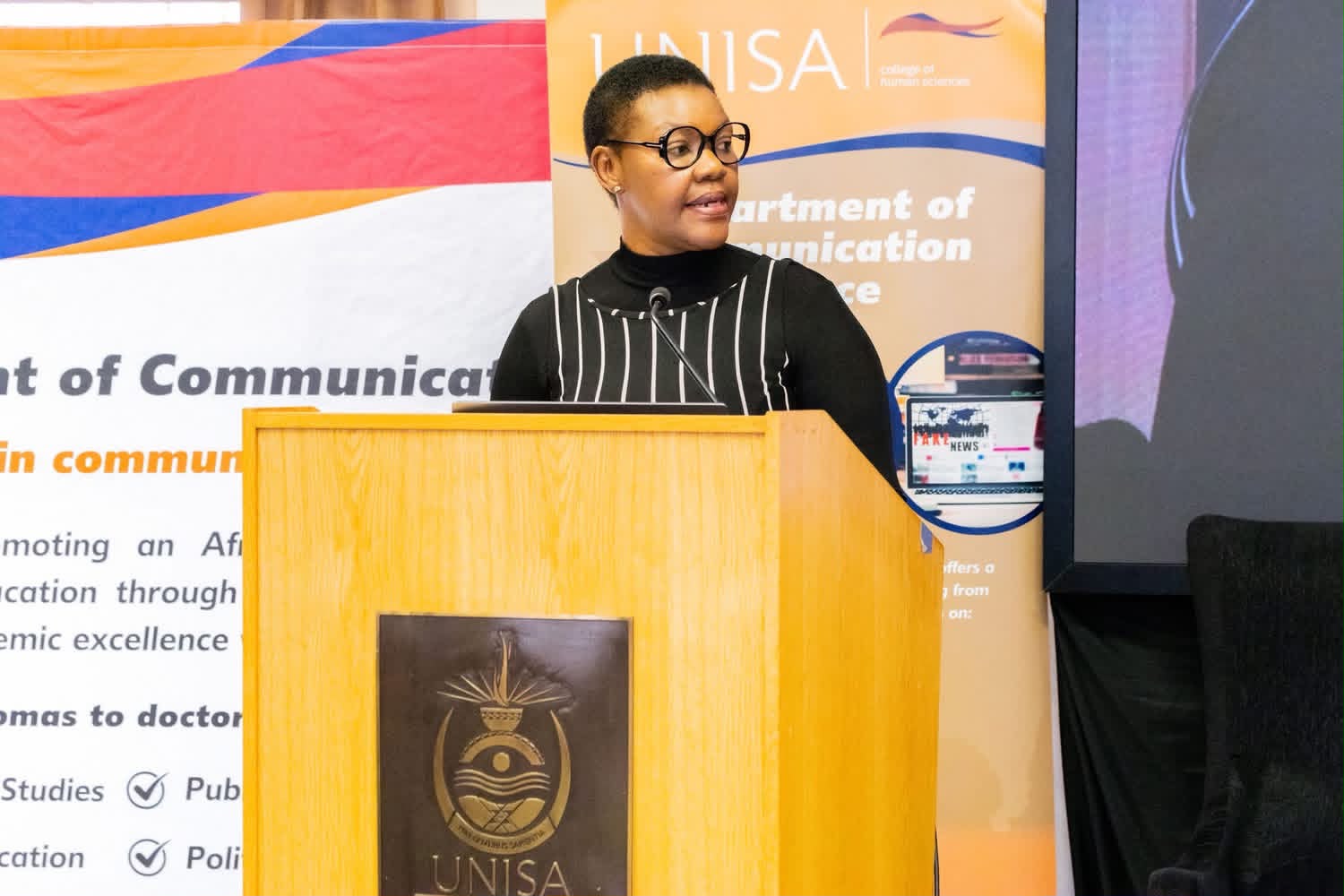
Delivering the keynote address at the Communications Students Association (COMSA) Annual Media Conference 2026, hosted at the University of South Africa (UNISA), Dr Phathiswa Magopeni challenged the media sector to rethink how accountability is understood and applied in an era increasingly shaped by podcasts, influencers, citizen journalists, and artificial intelligence. Drawing on more than two decades of experience in journalism and her current work in media regulation, she argued that many of today’s debates about accountability begin with a fundamental misunderstanding of the digital media landscape.
At the heart of her address was a crucial distinction: podcasts, influencer content, and citizen journalism are not platforms. They are content formats that exist within and travel across platforms. Platforms such as Meta, YouTube, TikTok, Spotify, and X are vast infrastructures that host, distribute, and algorithmically amplify content. Podcasts, livestreams, video essays, and citizen journalism are the products created and shared through those infrastructures. Confusing formats with platforms, she explained, has led to misplaced conversations about regulation and accountability.
Dr Magopeni emphasised that there are two distinct forms of accountability. The first is platform accountability, which focuses on infrastructure, algorithms, market power, and the relationship between digital platforms and publishers. The second is practice accountability, which focuses on the ethical conduct, standards, and responsibilities of content creators themselves. While platform accountability is important particularly in addressing market dominance and distribution it cannot adequately resolve concerns around misinformation, harmful content, or ethical lapses by individual creators.
She illustrated this with South Africa’s Media and Digital Platforms Market Inquiry, which led to the establishment of a Media Liaison Office between Meta and the Press Council of South Africa. While this intervention strengthens engagement between platforms and publishers, it cannot oversee the editorial conduct of millions of independent creators. The challenge, she argued, is that traditional journalism developed around three key pillars of accountability based on verification, redress, and standards. These pillars are embedded in newsroom structures and supported by press councils and regulators. Yet independent creators often operate outside these frameworks, leaving accountability gaps that affect both audiences and creators.
Importantly, Dr Magopeni cautioned against treating all content within the same format as though it serves the same purpose. A podcast, for example, may be investigative journalism exposing corruption, entertainment designed for humour, or marketing content promoting products. Each carries different responsibilities. Journalistic content must be held to high standards of verification and accountability because it makes claims in the public interest. Entertainment should minimise harm and clearly distinguish fact from creative expression. Marketing must be governed by transparent disclosure requirements. Effective accountability, she insisted, begins by asking what content is doing, rather than how it is delivered.
Looking ahead, she proposed practical steps to strengthen accountability in this evolving ecosystem. These include developing accessible fact‑checking tools tailored to independent creators, expanding existing complaints mechanisms to allow voluntary participation by podcasters and influencers, and co‑designing accountability codes with creators rather than imposing them. Such frameworks, she suggested, are more likely to gain credibility and support because they reflect the realities of digital content creation.
Her keynote also addressed the growing role of artificial intelligence in media production. Whether used to draft scripts, generate images, improve audio, or create synthetic content, AI is increasingly embedded in content creation. Rather than inventing new ethical frameworks, Dr Magopeni argued that existing principles in truth, fairness, transparency, and accountability remain fully applicable. The challenge is to apply them effectively to new technologies. She stressed the importance of maintaining human oversight, ensuring responsibility for published content always rests with a person, and adopting proportional transparency where AI use is disclosed when it materially influences or generates content.
In closing, Dr Magopeni reflected on the opportunities created by podcasts, influencers, and citizen journalism. These formats have diversified public discourse, amplified marginalised voices, and democratised content creation. Yet with these opportunities comes the responsibility to ensure that trust, integrity, and accountability remain central to public communication. Her message was ultimately a call to preserve the core functions that build public trust such as verification, redress, and ethical standards while adapting them to a rapidly changing media environment.
“The world does not need more voices. It needs ethical voices that people can trust.”
Her keynote at the COMSA Annual Media Conference at UNISA left the audience with a clear challenge to create content that not only informs and entertains, but also serves the public interest, upholds integrity, and contributes meaningfully to society.